Books, blog and other blather

Author: Mark (Page 88 of 90)

Zombies Zombies Zombies

I think I might start a semi-regular feature here, which I will not-so-inventively call Coming Attractions — a look at some movie and/or movies coming down the pike. And the first thing that comes to mind is all the zombie movies that are on the way.

This is an especially strange trend because I cannot remember any zombie movies in Korea. There was WALK LIKE A ZOMBIE (“Jombi-cheoreom Georeobwa”) in 2004, but that movie did not have any zombies in it (that I know of… I did not see it and I do not know anyone who saw it). And, of course, there have been plenty of movies featuring dead, undead, and not-so-dead spirits over the years. Plenty of zombies in the audience, but not so many up on the screens.

That is all about to change. Grace Lee (of THE GRACE LEE PROJECT) is working on an English-language film in the United States, but using iHQ money, called AMERICAN ZOMBIE. Ms Lee’s film is about two documentary filmmakers who discover a kind of “zombie festival” (like Lollapalooza?) they want to film, but things go awry (of course). This film is nearly done.

Jane Shin is making MOMMY’S RISEN, also low budget, about an 11-year-old kid sent to an orphanage when, surprise, his mommy comes back. She is not a brain-eater, however. Instead, mommy reopens her grocery store and tries to live her… uh, life. Live her death? Unlife? Anyhow, she goes about her business, but her body starts to decay and stink. When she tries to stop a bully from bothering her son, something goes wrong (even more wrong than the whole zombie thing).

Lucy Film is putting together one of those annoying three-short-films movies, but this one actually looks really good. It’s DOOMSDAY BOOK, and all three stories are pretty out there. “Heavenly Creature” is by Kim Jee-woon (TALE OF TWO SISTERS) and is about a robot at a Buddhist temple that has attained supreme Buddhist enlightenment, greatly annoying the engineer who built it. “The Gift of the Magi” is by Han Jae-rim (THE RULES OF DATING) and is about people trying to get off the Earth one Christmas, in the last few hours before the Earth is destroyed.

But the third short is the zombie one, by Yim Pil-sung (ANTARCTIC JOURNAL), and stars Ryoo Seung-bum. This is about a guy who meets up with some local toxic waste, meets a nice girl with a huge appetite for galbi, and finds some strange bruises and health problems arising. Understated, but definitely potential here.

But it is Ryoo brother, Ryoo Seung-wan, who is tackling the biggest zombie project of all. YACHA is going to be big — perhaps $10 million. It is still in pre-production, but it is Show East’s next big-budget movie and they have high hopes for it. But I think they are aiming for 2008. Maybe late 2007?

So, there you go. Four zombie movies on the way.

With so many films being made these days in Korea (it looks like over 100 will be released this year, which would be the most since 1991), there are certainly plenty to talk about. But we might have some huge news about one particular film. Maybe in the next week or two? If I’m allowed to tell, then I will pass the word on.

Screw the $500 Million, We Want Our Placebos!

The Ministry of Culture (along with the Uri Party and the extremely reluctant Korean Film Council) announced the long await “aid” package coming to the film industry, to make up for the halving of the screen quota. $521 million over the next five years, going to encourage art-house cinemas and independent film production, increase Korean film exports, and to better design and enforce copyrights and related legislation.

$521 million in “aid” going to the Korean film industry. Koreans spent $939 million going to the movies last year. About $563 million of that went to local movies, most of the rest to Hollywood, with a few dregs to Japan and here and there. So, government “aid” to the local industry could equal nearly 20% of the local industry ($100 million a year to a $563 million industry). Wow. Or just 10% if you include the entire market, but that is still a “wow”.

Now, I have long been a non-fan of Korea’s screen quota. I consider it a placebo that distracts people from

PIFF Wrap-up

So, what to say about this year’s PIFF? A little over 160,000 people turned out for 245 films. That number is a pretty big drop from last year (when attendance topped 190,000), but there were fewer movies screened over one less day this year (nine days, instead of the usual 10). In fact, the per-screen average was about the same as last year.

Also, it looks like organizers pretty much have gotten the kinks out of the system now. Ticket sales were largely glitch-free and smooth. Perhaps too smooth — thanks to online ticketing, seats for the most in-demand films were snatched up in seconds. You need to be a World of Warcraft champion to snag tickets to the hottest movies (of course, with a Press badge, life is strikingly different). But PIFF has always been a popular event, and there is no way around those sorts of scarcity problems, especially in the festival’s opening days, when things are busiest. Going to later screenings, in the last four or five days of the festival, is much calmer. Usually.

The most annoying thing about the festival, imodo, is the festival organizers’ continuing insistance on petty, moronic rules — in particular, the rule that you must have a ticket to get in the theater, even when there are empty seats. Really guys, the goal at a film festival is for people to see movies, not to support ticket manufacturers. When the film is ready to start, if there are empty seats and people who want to see it, let them in (in some sort of order… say buyers, festival pass holders, and finally press).

(Luckily, the old trick still works of getting a movie ticket to a nearby, less popular movie, then telling the volunteer at the theater door that you already entered and just went to the bathroom.)

And there are plenty of other annoying hang-ups. Like their organizers’ insistance that all interviews must must go through the festival. Why? Sorry, but if I have a connection with someone I need to talk to, I will have my interview whenever we think it best.

Anyhow, none of these problems are life and death. And I am just talking about watching movies; there are certainly more pressing issues facing the world. But it would be nice if the PIFF organizers put a little more thought into how the run things from the audience’s point of view. It’s not like PIFF is some big for-profit corporation. Korea desperately needs to build its non-mainstream movie audiences (hell, non-mainstream everything), and PIFF should set up its rules with that in mind.

Also, the weather this year was pretty much perfect — 25 degress by day, 13 at night, mostly sunny and no rain. Kudos to… uh, god, I guess.

Korean Music Charts – September

Look at that… while I was busy in Busan, the Music Industry Association of Korea came out with a new music chart.

The most noticeable part of the chart is the utter lack of Shinwha, even though the band was No. 1 last month. This has happened before, so I assume the problem is with MIAK. Perhaps Shinwha’s distributor is having some sort of tiff with MIAK, or something like that. On the other hand, Shinwha has the No. 1 spot on the foreign chart… So basically I have no idea.

Anyhow, the charts this month are absolutely stuffed with new releases. I wonder if the music biz is like the movies in Korea, with the Chuseok holidays creating a hot season. Embarassing to say I have never looked into that before.

This Month Artist Album Name Release Date This Month’s Sales Total Sales
1. Dong Bang Shin Gi Vol. 3 – Oh! Jeong. Ban. Hab 9.28 120,505 120,505
2. Lee Seung-chul Reflection of Sound 9.27 27,102 27,102
3. Koyote London Koyote 9.18 25,746 25,746
4. Nell Vol. 3 9.21 22,869 22,869
5. Big Bang Vol. 2 (Single) 9.28 21,000 21,000
6. SG Wannabe Vol 3 – The Third Masterpieces 4.07 14,178 290,951
7. Jang Ri-in Jang Ri-in Vol. 1 – Timeless (Single) 9.08 12,786 12,786
8. Paran Vol. 2 – Beyond the Blue Sky 9.04 12,052 12,052
9. Bae Chi Gi My Way 9.04 11,296 11,296
10. See Ya Vol. 1 2.24 10,935 89,822

(source: MIAK)

And here is the foreign sales chart:

This Month Artist Album Name Release Date This Month’s Sales Total Sales
1. Shinwha Japan Single 9.06 15,052 15,052
2. Arashi The Best Collection of 2002-2004 9.12 8,484 8,484
3. Beyonce B’Day 9.04 6,677 6,677
5. Stacie Orrico Beautiful Awakening 9.01 5,828 5,828
5. Christina Aguilera Back to Basics 8.14 5,571 17,085
6. Arashi Single Collection – 1999-2001 9.12 5,485 5,485
7. Justin Timberlake Futuresex/Love Sounds 9.12 5,378 5,378
8. Jo Sumi With Love: Best of Jo Sumi 8.25 4,527 11,524
9. Fergie The Dutchess 9.19 4,101 4,101
10. Richard Yongjae O’Neil Lachrymae 9.07 3,358 3,358

(source: MIAK)

Crossing the Line

UPDATE: Hah! My story has already been linked… to a Pro-North Korean website. If you are in South Korea, where that website is blocked, you can Google to read a cached version.
www.minjok.com/english/news.php3?code=2244

ORIGINAL:
As I mentioned in passing earlier, I wrote a feature for the New York Times while at the Pusan International Film Festival, about the latest Daniel Gordon documentary CROSSING THE LINE. The feature is now online, and you can read it here.

The story was also picked up by the International Herald Tribune. The IHT is owned by the NYT, so they can use the same stories, however, they are edited and put together totally separately. So even though I wrote just one story, the two versions look quite different.

Contributing to the disparity was that I wrote far too much — I was asked for 1,000 words, but I gave them 1,400. Both papers needed to cut, but each chose to cut very different material. The NYT cut the quotes I had by people who had been to North Korea, but were not really part of the movie. Whereas the IHT left those quotes and instead cut the part about Dresnok rebutting the charges made by fellow defector Robert Jenkins.

Hey, just for fun, here is the original story that I wrote, in case anyone is curious. Kinds of interesting to see how different editors tackle the same material.

BUSAN, South Korea – Even at 64 years old and in failing health, James Dresnok projects an imposing figure. Six-foot-five with a huge frame and giant jowls, he speaks into the camera with a firm but distinct southern accent. Metal teeth glint as he talks. “I will give you the truth. I’ve never told anyone before,” says James Dresnok – former soldier, defector, and for the past 44 years resident of Pyongyang, North Korea.

Dresnok’s tale lies at the center of Daniel Gordon’s latest documentary, “Crossing the Line,” along with the stories of three other American defectors who crossed the 2.5-mile, landmine-strewn demilitarized zone into North Korea. Consider it the anti-Shawshank Redemption.

The documentary is Mr. Gordon’s third surprising look inside the usually secretive Democratic Peoples Republic of Korea. The first, “The Game of Their Lives” looked at the 1966 World Cup soccer team that defeated the Italians and made it, against all odds, to the Cup’s quarter-finals. Then “A State of Mind” followed two young girls participating in the North’s overwhelming mass games.

The soccer-mad director met his co-producer, Nick Bonner, in 1997 while researching the North Korean soccer team. The always-exuberant and mischievous Mr. Bonner has been working with North Korea from out of Beijing for 14 years as the director of Koryo Tours. “Game of Their Lives” made Gordon and Bonner minor celebrities in North Korea, and with each film they have used that goodwill to delve deeper into mysterious nation. “We have taken an apolitical viewpoint, with interviews from both sides of the spectrum,” wrote Mr. Gordon in an email. “Our previous films have been shown both in North and South Korea and worldwide – we take this as a significant acceptance of their neutrality.”

But “Crossing the Line,” which had its world premiere Monday night at the Pusan International Film Festival, explores much more political and controversial territory. Bonner and Gordon have received incredible access to people and places in North Korea, more with each movie. “This was the story that we thought we could never tell,” said Mr. Bonner, over Korean makgeolli after the premiere. “But we said to the North Koreans, if someone does not make this film soon, you won’t ever have any record.”

Dresnok was born poor in Norfolk, Virginia in 1941, but his parent split up when he was 9, and soon after his father abandoned him. Dresnok ended up bouncing through a series of foster homes, and on his 17th birthday, he enlisted in the Army. When he returned from a two-year stint in Germany, he found his wife had taken a lover and wanted a divorce. Feeling abandoned yet again, Dresnok was crushed. Even now, decades later, the memory is one of two times in the film that he cries. “I’m just thankful we never had any kids, because I swore I would never leave my children,” he said as he broke down.

Soon after, Dresnok re-enlisted, this time was assigned to South Korea, but now his bitterness had turned him into a hell-raiser, spending all of his money on prostitutes and drinking. “I was fed up. If I died or I lived, I didn’t care.” On noon, August 15, 1962, with a court martial looming, Private 1st Class James Dresnok picked up the 12-gauge shotgun he was cleaning and, wearing his fatigues, walked across the DMZ in broad daylight.

Once in the North, Dresnok joined Private Larry Allen Abshier, who had defected three months earlier. In December 1963, Spc. 4 Jerry Wayne Parrish also defected, and then Sgt. Charles Robert Jenkins in January 1965. Together, the four became propaganda heroes for the North and major headaches for the US government.

After a couple of years in North Korea, though, the cultural problems had grown too great, so in 1966 the four fled to the Soviet embassy in Pyongyang, asking for asylum. But the Russians just turned them over to the North Koreans. Dresnok braced for some horrible punishment – but, he says, none came. They were just ordered to undergo more education. Finally, Dresnok decided he would try to fit in. “Goddamn it, I’m going to learn their way of life,” he said. “Man is the master of his life, and little by little I became to understand the Korean people.”

By 1974, Dresnok was considered rehabilitated, and was granted North Korean citizenship. He married an Eastern European woman and had two children. After that wife passed away, he remarried and has another son. He started appearing in propaganda films in 1978 with “Nameless Heroes,” and acted in over a dozen films over the next decade. Many North Koreans to this day call him “Mr. Arthur,” after a character he played in one film.

Jenkins is now North Korea’s headache, and Dresnok could barely contain his disgust when talking about him. Jenkins left North Korea in 2004, giving a series of high-profile interviews about the wretched life he endured in his four decades there – Dresnok vehemently denies all of Jenkins accusations, calling him a liar and bore, and implying with a grin that Jenkins had impotence problems. As for Jenkins’ claim that Dresnok used to beat him sadistically, Dresnok responds that they once got in a fight, but there were only two punches: “I hit him and he hit the ground.” After a few minutes, though, the visibly agitated Dresnok asks to change the subject. “The more I think about him, the more I get the ass.”

Dresnok certainly sounds like a true believer in the North Korean system. “I wouldn’t trade it for nuthin’,” he states emphatically. He takes great pride in that two of his three sons attend the prestigious Foreign Language School in Pyongyang, saying he never could have afforded that in the United States. “I don’t want my sons to be an illiterate old man like me,” he says. But Dresnok is a celebrity in North Korea, and Pyongyang, although it is poor by Western standards, is still the city of the elite. “Yeah, anyone living in Pyongyang is privileged,” said Mr. Bonner. “But the main force behind us was human interest.”

“Crossing the Line” is not the only North Korean offering on hand at this year’s Pusan festival. “Comrades in Dreams,” by German filmmaker Uli Gaulke, looked at movie projectionists in North Korea, as well as the United States, India and Burkina Faso. “I was frustrated by the small number of images in the media about North Korea,” Mr. Gaulke said. “I wanted to create a real figure, a flesh-and-blood person, in contrast to all the usual images of North Koreans.” Perhaps he did too good of a job, because when Mr. Gaulke showed his film to North Korean officials three weeks ago they did not like it. “They said that allowing me to shoot the movie was a bad idea. I took that as a compliment.”

Often, even harder than getting access to North Korea is maintaining that access over time. “You have to respect that their beliefs are important to them,” said Michael vanderZweet, a Canadian who has traveled to North Korea several times, including six months working for the Global Aid Network. “If you live there, you go out drinking with people, you build trust, you build relationships. You cannot help but built relationships.”

Relationships are perhaps the key to why Dresnok and the other American defectors built their lives in North Korea. Three of the four American defectors (save Jenkins) came from broken homes, with missing or abusive fathers. Instead, they made homes in the most extreme totalitarian father-state in the world, a country that has turned Confucian family values into a national ideology, with Kim Il Sung the ultimate father figure. Dresnok’s father might have abandoned him, but he found Kim Il Sung and a country that never would. Even though Dresnok now suffers from numerous health problems (mostly related to his smoking and drinking, which he refuses to stop), the North Korean government continues to provide for him and his family.

Which leads into just the second time Dresnok breaks down in the film. While talking about the North Korean famines of the 1990s, Dresnok says that despite the hundreds of thousands who died, the North Koreans never cut his rations. “Why? Why do they let their own people starve to death to feed an American?” Dresnok asks as he tears up. “The Great Leader has given us a special solicitude. The government is going to take care of me until my dying day.”

— Mark Russell

Korea Weekend Box Office – Oct. 13-15

Just because PIFF was going on does not mean the rest of Korea stops going to the movies. But it does mean I am late in updating the charts.

Not much to report this week… except that TAZZA has topped 5 million attendance (around $33 million). Not bad for just 20 days in the theaters.

This Week Title…………………………………. Release Date Screens Nationwide Weekend Attendance (Seoul only) Total Attendance
1. Tazza: The High Rollers 9.27 546 189,000 4,955,000
2. Radio Star 9.27 272 81,400 1,228,400
3. World Trade Center 10.12 140 56,000 201,000
4. Lady in the Water 10.12 73 31,000 85,800
5. Marrying the Mafia 3:Gamun-ui Buhwal 9.21 300 30,000 3,349,100
6. Maundy Thursday 9.14 250 23,400 3,120,400
7. Ant Bully 9.27 73 10,100 279,400
8. Rob-B-Hood 9.27 150 7,200 397,400
9. The Banquet 9.21 61 4,400 429,300
10. Jal Salabose 9.27 99 1,600 270,400

(Source: Film2.0)

Asia Film Market Wrap-up

Sorry for not posting for so long. This year was, for me, probably the busiest Pusan International Film Festival I have ever experienced. It was my first year there without my old editor doing the heavy lifting. And on top of it all, I had a feature I was writing for the New York Times. It is great writing for the NYT, but it requires a totally different part of the brain than writing for the trades does. Put it all together, and you get quite a hectic and stressful PIFF… but mostly in a good way.

After seeing a few movies in the opening days, I had to spend most of my time at the Asian Film Market. This was the first official year of the AFM, at least in name. There has always been plenty of industry events at PIFF, under a series of names and acronyms. But this year they put everything together and expanded the market and gave it a name.

AFM is basically four days of industry events and showcases and stuff like that. Four floors of the Grand Hotel were filled with movie companies looking to sell their wares. Down on the lower levels of the hotel, there was a location market and seminars. In the evenings, plenty of parties.

Most of the parties were to build recognition for some movie or another, or else for an entire country’s industry. But for some reason, no one knows how to throw a party because the majority of events were terrible — long (very long), poorly written presentations about some project or another with no care or concern about whether the guests were enjoying themselves. Consider it a metaphor for the entire Korean film industry.

Korean highlights include:
– Showbox had a big bash where they revealed more footage from D-WAR, a ridiculously expensive dragons-in-Los Angeles film. D-WAR will cost an incredibly $60-million (or more). Most of the money comes from private investors (especially director Shim Hyung-rae’s brother), but Showbox is investing a good hunk, too.
– Taewon Entertainment is investing in the $25-million epic THREE KINGDOMS: RESURRECTION OF THE DRAGON, which will star Andy Lau and Maggie Q.
– CJ Entertainment and Nabi Pictures presented THE RESTLESS, some sort of martial-arts/fantasy thing set in some sort of Asian purgatory with some sort of big-name cast.

Terrance Chang was there, not talking about CHRISTMAS CARGO, a big-budget Korean film that will be filmed in New Zealand eventually. If his announcement is as big as is rumored, though, it will be doozy. Since my blog is not anonymous, however, I will not talk about it yet.

I even met a squad of guys from CAA, which was pretty different. Such a different mindset from the more haphazard way the Asian movie biz usually runs. But Ken Slovitz gave me a quote (CAA usually does not talk to the press), so I was quite happy.

PIFF Kicks Off

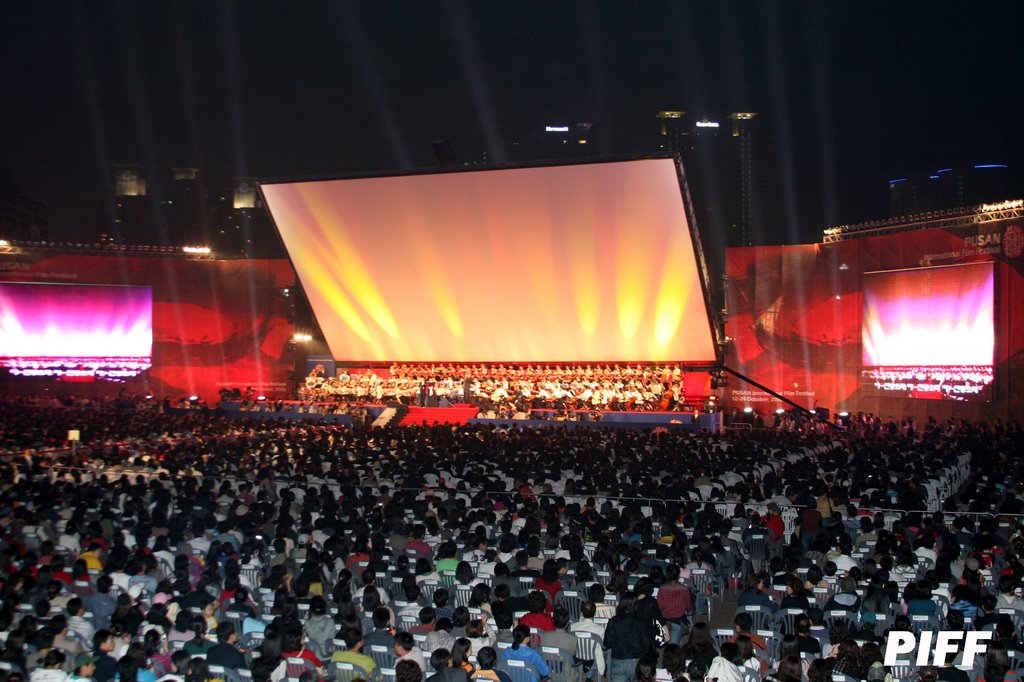
Well, the latest Pusan International Film Festival (the 11th, if you are keeping track at home) kicked off last night, with the usual heaps of hoopla and spectacle. And, as per my personal tradition, I hung out in the back, drinking beer. PIFF’s opening movie is always screened at the Suyeong Yatching Club, on the big outdoor screen with around 2000 people in the audience. But just behind the screening area, there is a couple of small restaurants, selling udong and beer. I find that environment easier on the senses than the earnestness of the PIFF opening ceremonies. Nothing wrong with PIFF’s opening ceremonies, but it is just not to my taste. Beer is.

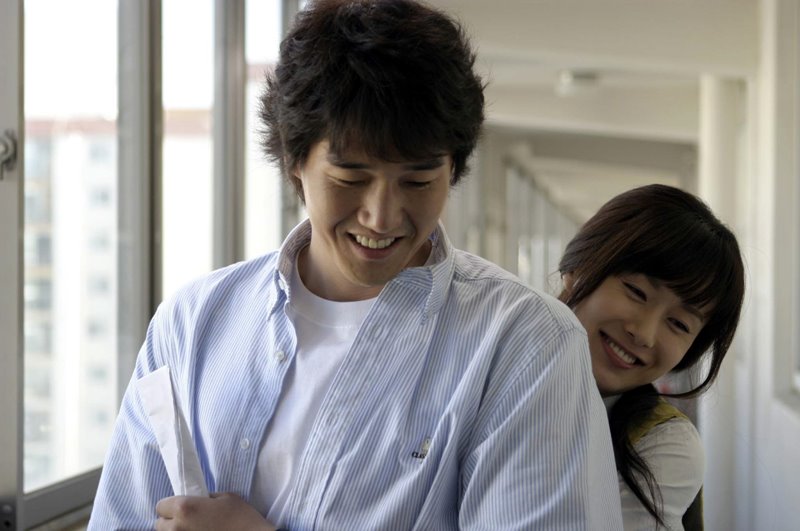
The opening film this year was Kim Dae-sung’s TRACES OF LOVE, a melodrama about a guy who loses his girlfriend in the Sampoong Department Store collapse of 10 years ago. Now, I only caught part of the film (thanks to the beer), but I luckily happened to be there when the building fell down. Nicely down, given the film’s budget constraints (although I was a little disappointed that no one sang “My Heart Will Go On”). But what happened right after that really turned me off of the film.

Just before the building collapsed, the lead character, played by Yu Ji-tae, was on his way to meet his girlfriend at the Sampoong. He is walking across the street when he sees the building disintegrate, right in front of his eyes. Dust is everywhere, but all Yu’s character thinks about is finding his girlfriend. “Min-ju! Min-ju!” he shouts, in a daze.


The problem was, as he is shouting this, there are dozens of injured people running past him in the other direction, fleeing for safety. Does Yu’s character ask anyone if they need assitance? Does he try to help anyone? Of course, no. All he does is wander around the site for hours, getting in the way of rescure workers, while doing nothing to help anyone. For some reason, that really ticked me off, and soon after I returned to my hotel room to watch the season finale of LOST.

After LOST, it was time for the big opening night party at the Paradise Hotel. It was a pretty decent event, with all the usual suspects there like every year. Most fortunately for me, I bumped into someone I have been trying unsuccessfully to get in touch with for a couple of weeks now (someone who I need to talk to for a North Korea article I am writing). Then we crashed the actors party on the second floor, which was really amusing because they had oodles of fancy food but no one was touching anything. No carbs! Must stay thin! Hah.

Then came the infamous odeng bar. Each year, the odeng bar behind the Grand Hotel is one of the major late-night spots for everyone to drink and make trouble. It was definitely one bar too many for me. I’m just happy I did not continue with my friends who went to some karaoke room. Sleep was much needed for me.

Today, I checked out the newly restored print on the Shin Sang-ok film ARCH OF CHASTITY. I tend to prefer the older films at these film festivals, and Shin’s 1962 movies about a widow and the man who tries falls in love with her was pretty amusing. Lots of sex and heaving bosoms. Not bad for an old film.


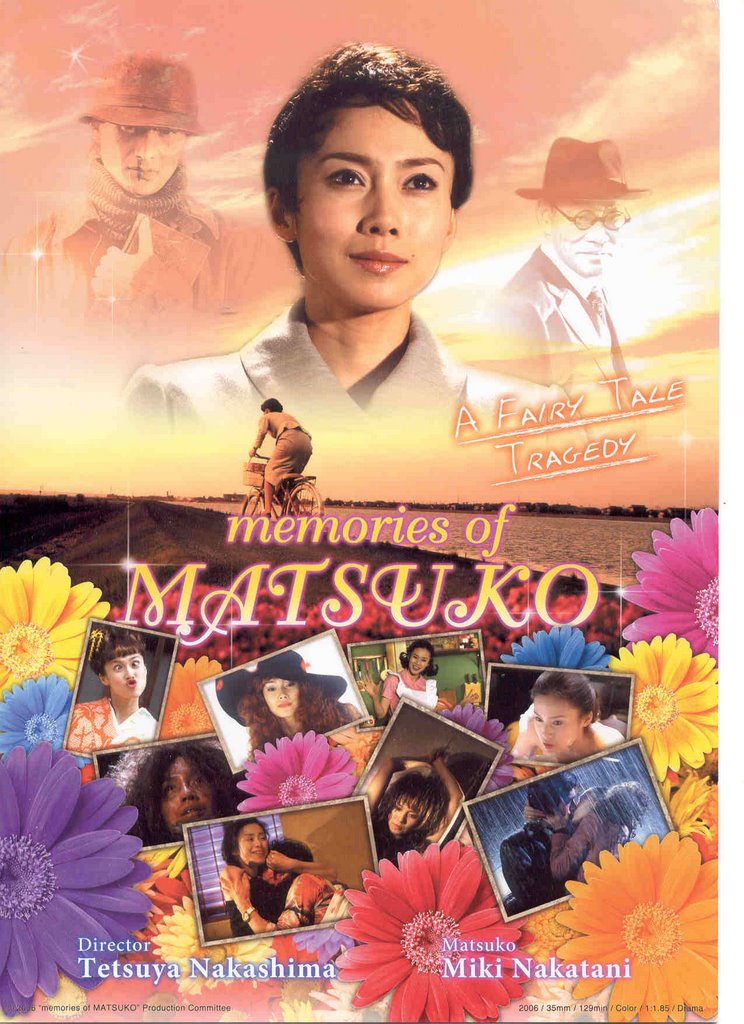
Then I saw the Japanese film MEMORIES OF MATSUKO, which was pretty good. Although if I hear that kitchy theme song one more time I might have to stab myself in the ears. It was a quirky film about a guy discovering an aunt he never knew he had. She has just died, and he must clean out her apartment. It was shot very much in the style of the Thai film CITIZEN DOG (that is colorful and surreal, with the occasional musical number), although it was much darker.

A Little Rain Must Fall

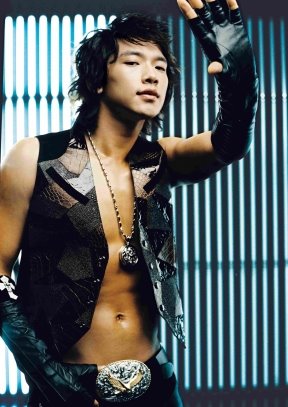
Today at the Seoul Foreign Correspondents Club we had a press conference featuring the Korean pop star Rain (“Bi” in Korea, and his real name is Jeong Ji-hun, or Chung Jee-hoon, or… sigh). Rain is one the verge of being perhaps Korea’s biggest singing star. His posters fill shopping malls all around South Asia (especially Thailand). His two shows in New York last February received extensive (and mixed) reviews in all the major media. He has an inoffensive R&B style, kind of like American top-40 R&B, without the cussing or crotch-grabbing. All of the edge with none of the cutting.


Anyhow, Rain seemed like a very nice, polite young man. Very sincerely and earnest, if a tad vacuous. Ask him about what music he likes, and you hear Usher and Michael Jackson. Ask him about what he had to learn to be successful in the United States, and he talked about world-renowned choreographers and expert stage show producers. Raised on music industry jargon, he talked about “markets” and storytelling concert concepts far more than songwriting or music.

It was a pleasant-enough event, but it got me thinking, “Why is this all Korea has?” Music is a spectrum, with Justin Timberlake et al. on one end, a bunch of kids in their garage or some local dive on the other end, and a whole wealth of options in between. That is not only true of pop, but rock, jazz, even classical. But for some reason, Korea only latches on to extreme pop, gloss, commercial end of the spectrum.

Actually, the reasons are not that hard to figure out. Korea is not a diverse market for any product. The music industry overwhelmingly focuses on the teen market, recycling the same ideas for over a decade now. Etc. But the No. 1 reason Korea’s music market is so lame is that the government has deliberately made it so with useless, onerous regulations.

The worst regulations are the cabaret laws. Korea is full of byzantine regulations about how live music can be played. If you have live music and alcohol, then you need a cabaret license, which is expensive and generally only for sleazy clubs catering to older, trot-loving clientel. It is pretty much impossible for a small, underground bar to afford a cabaret license. Without a license to serve alcohol, how many college kids are you going to get? Young adults who want to blow off steam and have a good time are going to regular bars before they are going to go to hole-in-the-wall playing live music (and without the alcohol income, who can afford to make a place look nice?).

The regulations are capricious in a whole host of other ways (I’m sure I know just a fraction of the problems). For example, getting a foreign act for a small club is all but impossible. And bringing in the best from around the region is a great way to get young people excited about musical possibilities, to raise the standard here.

Regulators also make it pretty much impossible to have genre-specific radio stations. So radio in Korea is all over the place, with each station doing a little of everything and a whole lot of nothing. As a result, it is that much harder to cultivate an audience and a depth of knowledge about any genre.

Which then got me thinking about how government regulation in Korea cripples and kills so many areas, especially in entertainment and culture. Television suffers from the ridiculous Korea Broadcasting Advertising Corporation and Korea Broadcasting Commission. Movies have the screen quota (although not as badly as they did until recently) — just one more example of the government doing something to be “fair,” and in the process destroying creativity, art and all the good stuff in favor of ugly, stupid corporations (see this earlier post). I should put together a rant on the whole mess, but I am not quite ready yet. To come… soon, perhaps.

Korea Weekend Box Office – Oct. 6-8

Not a lot time for me to talk about this week’s chart (deadlines, deadlines). My quick tally of the 10-day Chuseok box office was about 8 million tickets — not bad, but far from the 12 million some were predicting.

TAZZA: THE HIGH ROLLERS (the new and improved title of WAR OF FLOWERS) easily took the top spot, with nearly 4 million tickets sold since Sept. 27.

ANT BULLY (which was No. 7 the previous weekend, but was not on Film 2.0’s chart when I wrote my post) rose two spots to No. 5 last weekend, while the Kim Jeong-eun comedy JAL SALABOSE fell two spots to No. 8. I’m guessing word of mouth was responsible for much of that movement, along with the additional kids going to the cinema (thanks to parents desperate to get their tykes out of their hair after several days of holiday fun). While not exactly a hit, ANT BULLY is not doing bad for a film on just 94 screens.

The Sponge-distributed VOLVER still ekes out of spot at the bottom of the chart. Nice to see something by Almodovar there, even if it is not tearing up the box office. Hopefully, we’ll see more stuff like that in the weeks and months ahead.

THE HOST is almost toast. Now playing in just 10 theaters around Korea, it looks like Bong Joong-ho’s monster movie has reached the end of its run, with just over 12.97 million tickets sold. So close to the magical 13 million, but just short.

This Week Title…………………………………. Release Date Screens Nationwide Weekend Attendance (Seoul only) Total Attendance
1. Tazza: The High Rollers 9.27 620 363,000 3,835,000
2. Marrying the Mafia 3:Gamun-ui Buhwal 9.21 420 134,700 3,094,400
3. Radio Star 9.27 291 115,600 856,000
4. Maundy Thursday 9.14 250 67,500 2,969,900
5. Ant Bully 9.27 94 35,500 241,900
6. The Fox Family 9.27 200 31,400 280,900
7. Rob-B-Hood 9.27 174 30,800 315,700
8. Jal Salabose 9.27 230 15,800 261,100
9. The Banquet 9.21 90 14,100 403,500
10. Volver 9.21 5 2,100 16,600

(source: Film 2.0)

« Older posts Newer posts »

© 2026 Mark James Russell

Theme by Anders NorenUp ↑